The Basque Country is a land full of landscapes, villages and cities that worth a visit. Even though 5 days aren’t enough to see everything, it’s a good figure to explore a part of it. In this post, I tell you what was our 5-day road trip in Basque Country, which can be an inspiration for you to organize your own itinerary.
Day 0. Let’s begin the road trip
We arrived from Valencia, so we had several hours until we arrived to the Basque Country or Euskadi. That’s why we dedicated a day to arrive, making some interesting stops.
Departing by car at 7 in the morning, our first interesting stop was around midday in Olite, Navarra. This village out stands because of its magnificent castle. From there, we arrived to Pamplona, where we strolled around the old quarter.

We continued until we arrived to Tolosa (Gipuzkoa), where we stayed during all our journey.
Day 1. Dragonstone and fairytale castles
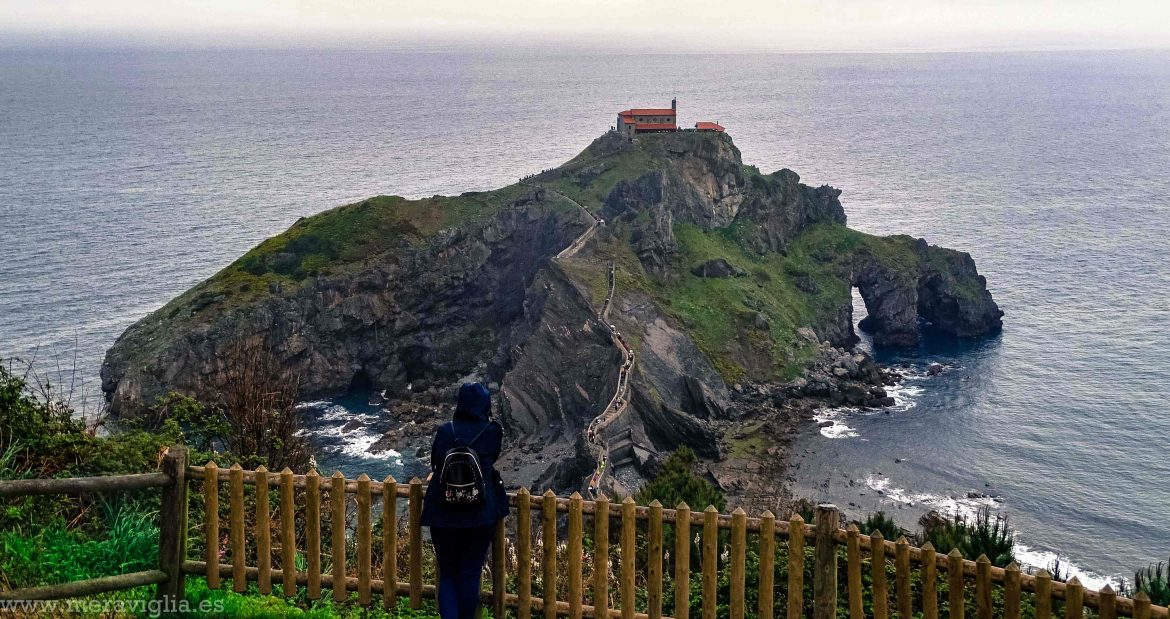
This first morning we went to visit one of the most amazing places in the Basque Country: San Juan de Gaztelugatxe. It is an islet linked to the land by stoned steps that has become very famous because here it was filmed a chapter of Game of Thrones, being this the so called Dragonstone.

Due to the big amount of visitors, it is necessary to book by Internet in high season. It is free, but it’s absolutely recommended to book it in advance. You can find here the booking site of San Juan de Gaztelugatxe.
Even though the most famous part of Gaztelugatxe are the stoned steps, you mast walk some kilometres before reaching this part and, on the way back, they are uphill, so remember to wear comfortable footwear and water.

After San Juan de Gaztelugatxe, we went to have lunch to the port of Bermeo, which is only 11 km from there. After this, we arrived to Mundaka, another charming fishing village and, later, to a place I was wishing to visit: Butrón Castle.
This castle is in Gatika, in the middle of the forest. Even though I had sawn it in several photos, I think it is even more fascinating in person. Its interiors can’t be visited, but I totally recommend go to see its exteriors. From there, we came back to Tolosa.

Day 2. Donostia in full
This second day we visited San Sebastián or Donostia. We parked near the train station, and we started walking from the end where Kursaal Auditorium, home of San Sebastián Film Festival. From there, we strolled alongside the coast, surrounding Mount Urgull.
After a stop in one of its pintxos bar, we continued walking alongside La Concha Beach until we arrived at the base of Mount Igueldo, where we took the funicular to the top, from where the views are amazing. Also, there is a curious amusement park.

After going down again by funicular, we visited the sculpture Peine de los Vientos (Comb of the Winds), and we had lunch in Ñam Bar Restaurante. Again full energy, we went to the historical quarter. That evening we returned to Tolosa to get to know well this city.
To get to know better San Sebastián, you can book this free walking tour in English.
Day 3. The Basque coastline and its amazing beaches
It is time to know the Basque coast. Following the natural course of the coastline, we started in Zarautz, that has a great beach known by surf lovers because of its waves. The next stop was Getaria, place of birth of Juan Sebastián Elcano, who took part in the expedition of Magallanes, the first person to circumnavigate the world.

We had lunch in Getaria and our next stop was going to be Zumaia, but because of the festivities it was impossible to park the car, so we changed plans, and we went to Lekeitio. This town is further from the rest of towns, so it was more than an hour driving. Here, there is an island that you can reach by walk when the tide is low.
From Lekeitio, we started the way back. We tried again in Zumaia, as it’s my favourite place in Basque Country. As it was late, this time we were able to park. We went to Itzurun Beach to see its astonishing flyschs.

The surprise was that we arrived right on time for the sunset, enjoying one of the most beautiful ones I’ve ever seen. It was the perfect ending for the day, we enjoyed it a lot while we explored flyschs, a geological element of global importance, providing information on more than 30 million years of Earth’s history.

Day 4. Time for Bilbao
The last complete day in Basque Country we went to Bilbao, one of the most important and famous cities in the place. We parked in an underground parking in the city centre, and we strolled around its old town, entering before in the tourist office of Plaza Circular.

After the compulsory stop for some pintxos, we continued getting to know the city. After lunch, we arrived to the flagship building in the city: Guggenheim Museum. Even though I would have liked to visit the inside, we didn’t have time for that. Nonetheless, it is worth a visit, even if you only can visit the outside, both for the building itself and the monuments of Mamá (the giant spider) and Puppy (the dog made of plants and flowers).

Day 5. Back home
We start the travel back home, but stopping to visit another part of the Basque Country: Rioja Alavesa. First, we see the outside of Ysios Winery, whose building was designed by Santiago Calatrava.

The next stop in Rioja Alavesa was in Laguardia, that belongs to the association called Most beautiful towns in Spain. After that, we went to Elciego to take a look to the winery Marqués de Riscal, designed by Frank Gehry (the same architect as Guggenheim Museum). Time to say goodbye to the Basque Country, a land I would love to visit over and over again.
Related article: 6 beautiful villages in the Basque Country that you should visit
Pictures are from my travel blog in Spanish, Meraviglia, so I own the rights to them.
No responses yet